Cart
Cart  Login / Register
 CALL Us
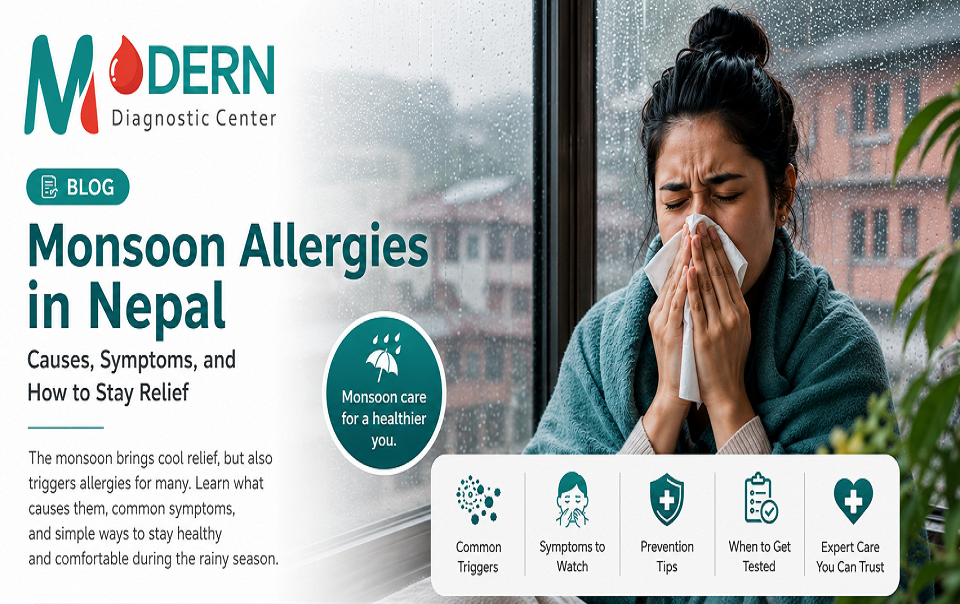
Monsoon in Nepal turns out to be a huge relief from the heat of summer. With green fields, pleasant wind, and rainfall, the monsoon creates an easygoing atmosphere. But it is not the same for everyone, as there are people who tend to get affected by this season with plenty of symptoms like sneezing, itching, skin rashes, stuffiness, and difficulty in breathing. Many individuals consider these to be just seasonal ailments, while in reality, it could signify allergy.
Monsoon condition is conducive for development of allergies, wherein mold, dust mites, pollen, and fungi are some of the allergens that develop during this season. If anyone suffers from allergic symptoms each monsoon, it might be a good idea to go for an allergy test in Nepal.
Why Are There More Allergies Cases During Monsoon Season?
The rainy season leads to an increase in humidity, wet conditions, and less ventilation indoors. All of these conditions work together to trigger common allergic symptoms and reactions.
Some common allergy-causing triggers during monsoon season are:
- The growth of mold and mildew on damp walls, ceilings, and furniture
- Dust mites present in the humid bedding, carpets, and other furniture
- Seasonal pollen from plants being released into the air
- Fungal spores being carried in the air
- Allergens released by roaches in humid areas
People suffering from asthma, allergic rhinitis, eczema, or sensitive skin may suffer more from allergies triggered during the monsoon season.
Signs of Rainy Season Allergies
Allergic reactions have various symptoms depending on the person. In general, however, one may expect symptoms affecting either the respiratory system, eyes, or skin.
Respiratory Symptoms
- Sneezing on a regular basis
- Nasal congestion or runny nose
- Persistent throat irritations
- Problems in breathing
Eye Symptoms
- Eye itchiness
- Eye redness and discharge
- Swollen eyelids due to allergic reactions
Skin Symptoms
- Presence of rashes
- Occurrence of hives
- Itchiness
- Eczema flare-up
Apart from this, some persons may also suffer from headaches, fatigue, and sinus pains while reacting to specific allergens.
Reasons Why You Should Never Overlook Symptoms of Allergy
A lot of people continue using various medications without knowing the cause of their allergies. Although antihistamines can stabilize the condition for some time, it does not address the root cause of the problem.
One might get complications like;
- Recurrent respiratory infections
- Insomnia
- Loss of work productivity and efficiency
- Spells of asthma
- Prolonged skin problems
- A fall in the overall quality of life.
Establishing correct allergy diagnosis will help eliminate all these problems.
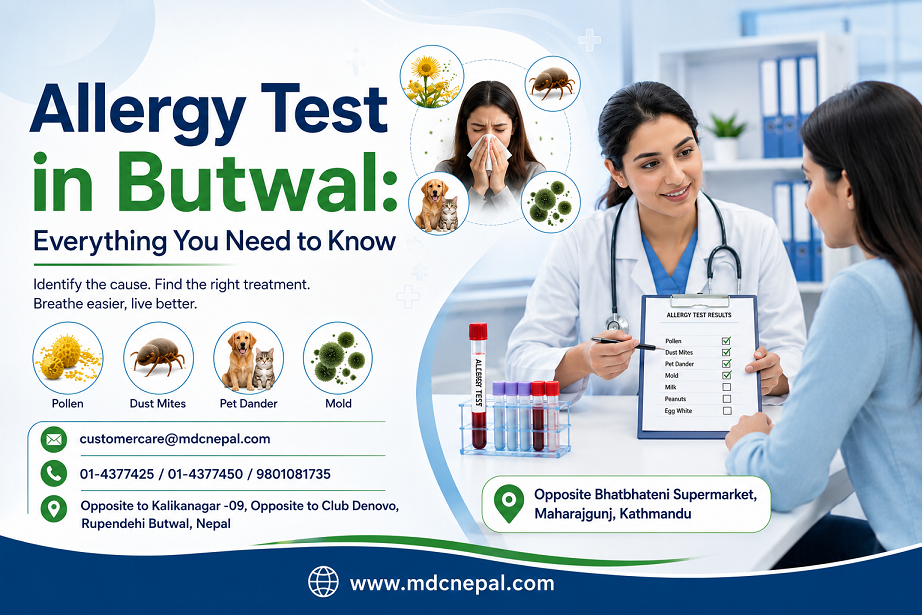
What does allergy testing mean?
It is a diagnostic procedure that makes it possible to discover the substances that are responsible for allergic reactions in our bodies. Rather than guessing whether it is dust, pollen, fur, food, pet’s saliva, or mold. An allergy test in Nepal helps your provider plan and execute a perfect and suitable treatment plan for you.
The Importance of Allergy Testing
An accurate diagnosis: Allergy testing helps identify the specific allergen that is causing allergy symptoms in the patient instead of guessing which allergen is responsible.
A personalized treatment: Allergy testing provides an immediate treatment plan to treat allergic reactions and suggests drugs and modifications to lead a better life according to the person’s condition.
Avoiding future allergic reactions: When the allergic person is aware of the allergen that is causing the allergy, he/she knows how to prevent contact with the allergen.
Better asthma control: Asthma is related to allergies for the most part. The knowledge about the allergy causes helps to get control over asthma attacks.
Quality of life improvement: Less sneezing, fewer rashes on the skin, good sleep and working productively are all part of a better quality of life.
How to handle monsoon allergies
It is also necessary to avoid allergens even if you get tested. The following are effective recommendations that may help.
- Make sure your home is kept dry and properly ventilated.
- Fix the leaks as soon as possible.
- Clean away any traces of mold on the walls and bathrooms.
- Wash bed linen frequently.
- Vacuum carpets and upholstery as often as possible.
- Avoid drying washed clothes inside the room.
- Use a mask while cleaning up dusty areas.
- Keep windows closed during the rain in order to avoid getting out the allergens from the outside world.
Why Early Allergy Testing Matters
Most people don't visit the doctor until their allergies have become very extreme or intolerable. However, the early diagnosis of an allergy problem is beneficial in many ways.
First, it can:
- Help to prevent symptoms from getting worse
- Reduce the need for excessive medication
- Help to avoid unnecessary use of antibiotics
- Help manage asthma-related problems
- Help prevent children from developing chronic allergies and related problems in the future
The process of identifying allergens early helps by allowing people to change their lifestyle to avoid allergen exposure and the associated health complications.
Final Thoughts:
Monsoon is one of the most attractive seasons in Nepal, but it comes with a rise in allergy-related health problems. Continuous sneezing, a runny nose, itchy eyes, and skin rashes are only symptoms of an allergy and should not be ignored. An allergy test is must when any of their symptoms appears. Always remember precaution is better than cure.